“We bought oil-resistant rubber sheet and after a few days in oil it had swelled. Is it fake?”
In most cases, no — the material was simply wrong for the duty. Oil resistance comes down to whether the rubber and the oil are chemically compatible.
1. Why rubber sheet swells
Rubber is a polymer network. If the oil molecules have a similar polarity to the rubber, they migrate into the network and push it apart — this is swelling. The gasket grows thicker and softer, stops sealing properly and eventually weeps.
The rule of thumb:
- Non-polar oil (mineral oil, hydraulic oil, engine oil, petrol) with non-polar rubber (natural rubber, EPDM) → swells. Do not use.
- Non-polar oil with polar rubber (NBR nitrile, FKM fluoroelastomer) → stable. This is what “oil-resistant rubber” means.
2. Oil-resistant compounds compared
| Material | Temperature range | Oil performance | Typical use |
|---|---|---|---|
| NBR (nitrile) | -20 to 100 °C (short-term ~120 °C) | Good with mineral, hydraulic and vegetable oils | General oil-resistant gaskets, fuel and oil line seals, tank pads |
| HNBR (hydrogenated nitrile) | -30 to 150 °C | Oil + heat + abrasion, long service life | Hot oil, dynamic seals, long-life applications |
| FKM (fluoroelastomer) | -20 to 200 °C | Strong against oils, solvents and heat | Hot oil, additive-heavy oils, chemical media |
| CR (neoprene) | -20 to 100 °C | Moderate oil resistance; good weathering and ozone resistance | Outdoor duties with light oil contact |
| EPDM | -40 to 120 °C | Not oil resistant; excellent with water, steam and weather | Water, steam and outdoor work — not oil |
| Natural rubber | -20 to 80 °C | Not oil resistant; lowest cost | General water and air sealing |
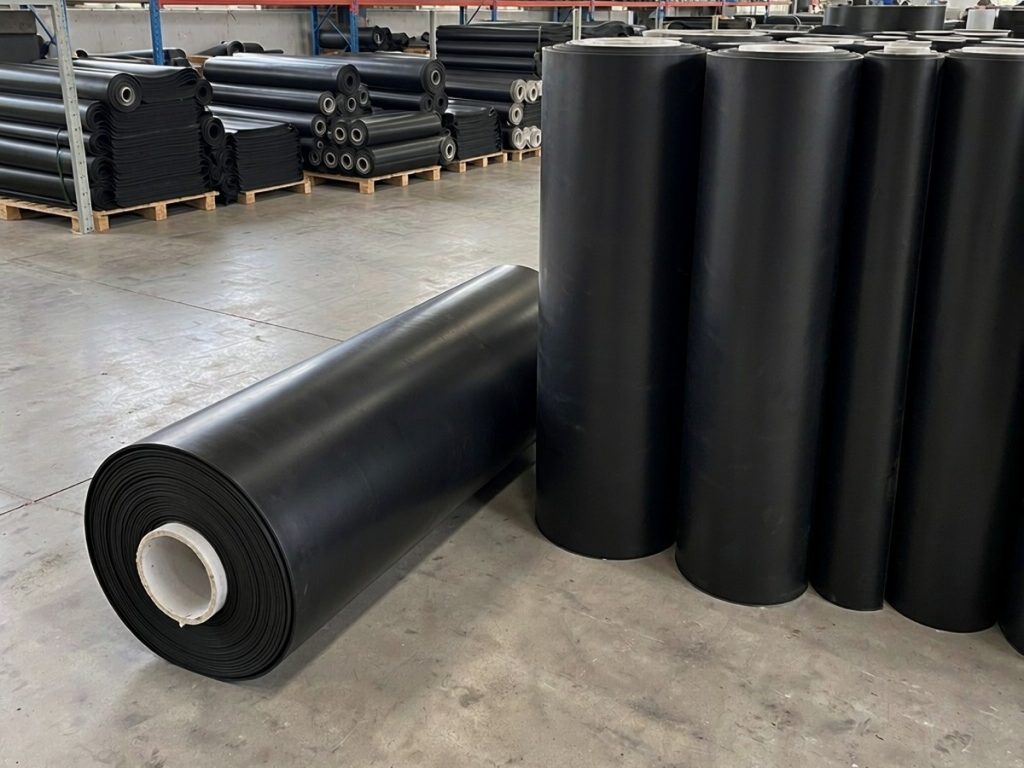
NBR is the compound we supply most often for oil duties — see oil-resistant rubber sheet (NBR). For hot oil or solvent contact, use fluororubber sheet (FKM).
3. Why “oil-resistant sheet” prices differ so much
The key variable is the acrylonitrile content (ACN) of the nitrile compound:
- Higher ACN → better oil resistance, but poorer low-temperature flexibility (it stiffens in winter)
- Lower ACN → better low-temperature performance, but aromatic oils attack it more readily
So two sheets both described as “NBR sheet” can differ significantly in performance and price. Tell us the oil type and temperature so the compound can be specified, rather than supplied to a generic grade.
4. Three symptoms, three causes
| Symptom | Cause | Fix |
|---|---|---|
| Thicker, larger, softer | Polarity mismatch — swelling | Change to NBR or FKM; stop using natural rubber or EPDM |
| Hard, cracked, no elasticity | Temperature above the material limit — ageing | Check the actual oil temperature; use HNBR or FKM |
| Sticky surface, crumbling | Aromatic or heavily additised oil attacking standard NBR | Move up to FKM, or switch to a PTFE-envelope construction |
5. Four questions that settle the selection
- Which oil? Mineral, hydraulic, engine, petrol, vegetable, additised oil, or solvent
- What temperature? Ambient, below 80 °C, or above 100 °C
- Static or dynamic seal? Dynamic duties need the better abrasion resistance of HNBR or FKM
- What pressure? High pressure may require a thicker section or a reinforced construction
Answer those and we can normally quote accurately first time. For combined high temperature and chemical resistance, consider a PTFE facing or envelope; for general duties, industrial rubber sheet is sufficient.
6. Three common traps
- Comparing per-kilogram prices. Higher filler content means a heavier sheet, but not a better one. Compare size, weight and price per sheet
- Buying on the word “oil-resistant” alone. Without the oil type and temperature, the material has not actually been selected
- Reclaimed rubber sold as oil-resistant sheet. Low cost, poor oil resistance and short life — it fails within months
Not sure which compound you need? Send us the oil type, temperature, pressure and dimensions — we will identify the material first, then quote. Use our contact page.